A clicker die is simple in principle, but the details determine how well it runs. We review the part geometry, material and thickness, press, registration needs, internal features, and expected use before choosing the rule, base, and punches.
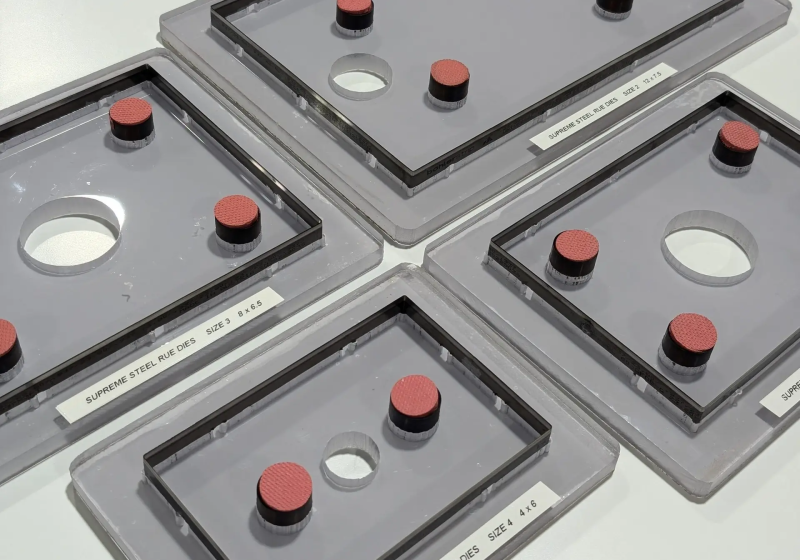
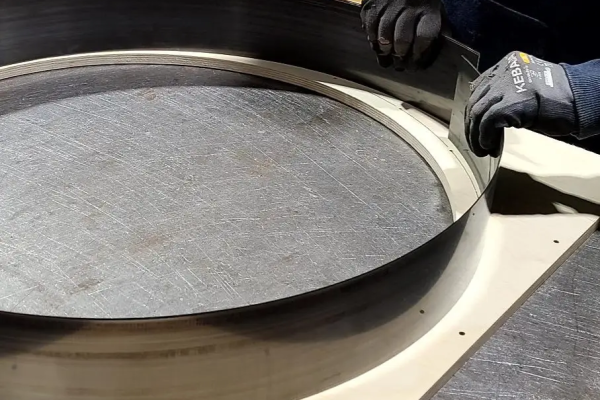
CLEAR BASE · VISUAL ALIGNMENT
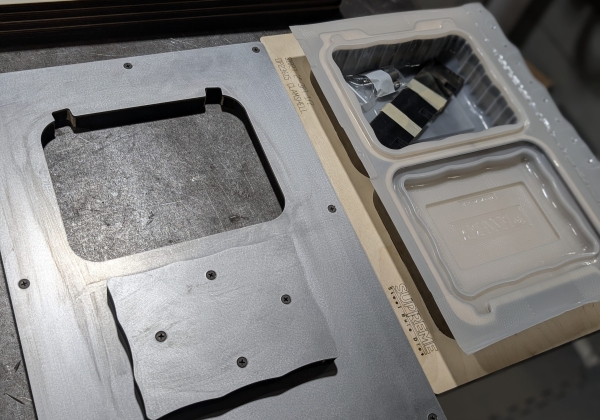
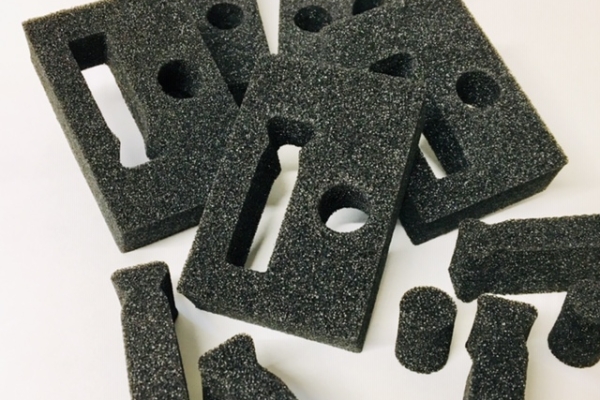
THERMOFORMING CLICKER DIE · MATCH PLATE
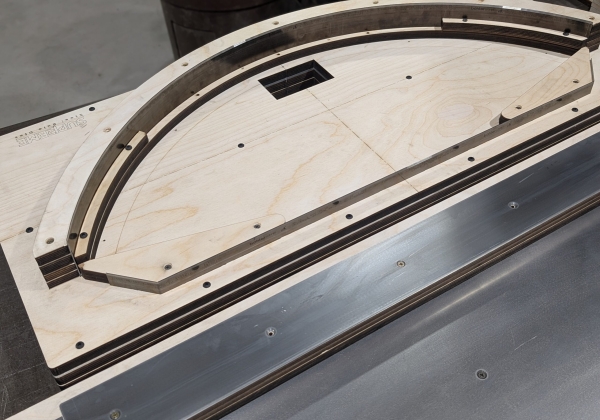
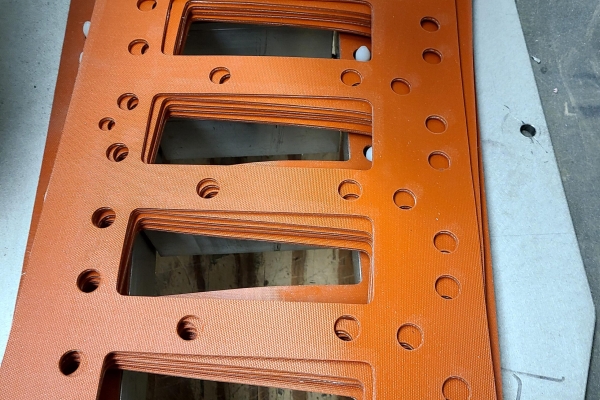
BUILT-UP HIGH-RULE CLICKER DIE · MATCH PLATE
Configurations
Built to fit the application.
Clear Base
VISUAL ALIGNMENT
Visual positioning
Useful when the operator needs to see printed or patterned material through the die for alignment.
Traditional Dieboard
PRODUCTION STANDARD
Simple and proven
A durable, economical construction for straightforward cutting applications and repeat production.
Registration & Punches
GUIDES · HOLES · SLOTS
More control in production
Registration pins, retractable guides, internal punches, and common-cut layouts can be incorporated when the job calls for them.
For an Accurate Quote
Send what you know.
You do not need to specify every tooling detail. Send the drawing and the information you have; we’ll review the application and follow up if anything else is needed.
Drawing
DXF, vector PDF, CAD file, or dimensioned drawing.
Material
Material type and thickness.
Press / Machine
Clicker press or machine information, if known.
Special Details
How many up, registration, holes or slots, tight features, or a required knife height.
Materials
Common clicker applications.
If your material is not listed, send it anyway. Material behavior and thickness matter more than the category name.
Leather
Foam
Rubber & Silicone
Gasket Sheet
Fabrics & Felt
Why Supreme
Application Review
We understand the cut
We review the material, thickness, geometry, press, registration, and internal features before deciding how the die should be built.
From a Manufacturing Customer
“They have provided our facility with gasket and sponge cutting die clickers of superior quality and have been extremely responsive and supportive during this process.”
DXF or vector PDF is preferred for 2D cutting geometry. CAD files and dimensioned drawings are also useful. Include a reference dimension whenever possible so scale can be verified.
A clear base can be useful for visually locating printed or patterned material. For repeat production, registration pins are often faster and more consistent when the part and process allow them.
Often, yes, but the result depends on the material, thickness, press, and stack height. Cutting multiple layers can reduce cut quality on some materials, so the process should be tested.
Steel rule has physical bending limits. Generous radii are preferred; where the part allows it, a 1/8-inch radius or larger is a good design target. Very small or tight features may require a machined punch instead.